01
Quantum algorithms
Algorithms for quantum simulation, Gibbs sampling, and complexity-theoretic questions relevant to near-term and long-term quantum technologies.
Department of Computer Science, University of Copenhagen
We study quantum algorithms and tensor network methods with applications in physics, machine learning, finance, and engineering. The group builds mathematically grounded tools that connect quantum information, numerical methods, and practical computational problems.
Research
01
Algorithms for quantum simulation, Gibbs sampling, and complexity-theoretic questions relevant to near-term and long-term quantum technologies.
02
Efficient classical representations for high-dimensional systems, with emphasis on matrix product states, functional tensor methods, and quantum-inspired numerical algorithms.
03
Methods targeted at physical modeling, machine learning, finance, and engineering problems where structure, uncertainty, and scale matter.
People
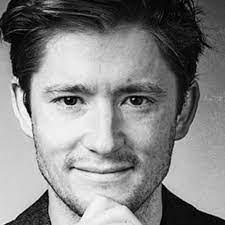
Associate Professor
Works on quantum algorithms and tensor networks with applications in physics, machine learning, finance, and engineering, with earlier work on quantum Markov chain mixing and dissipative state preparation.
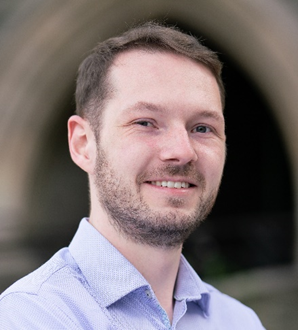
Postdoc
Works on theoretical and computational methods spanning physics, chemistry, and tensor-network based modeling.
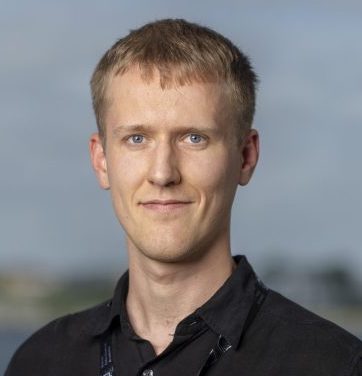
PhD Student
Works on efficient training of deep learning models, focusing on low-rank methods and quantization.
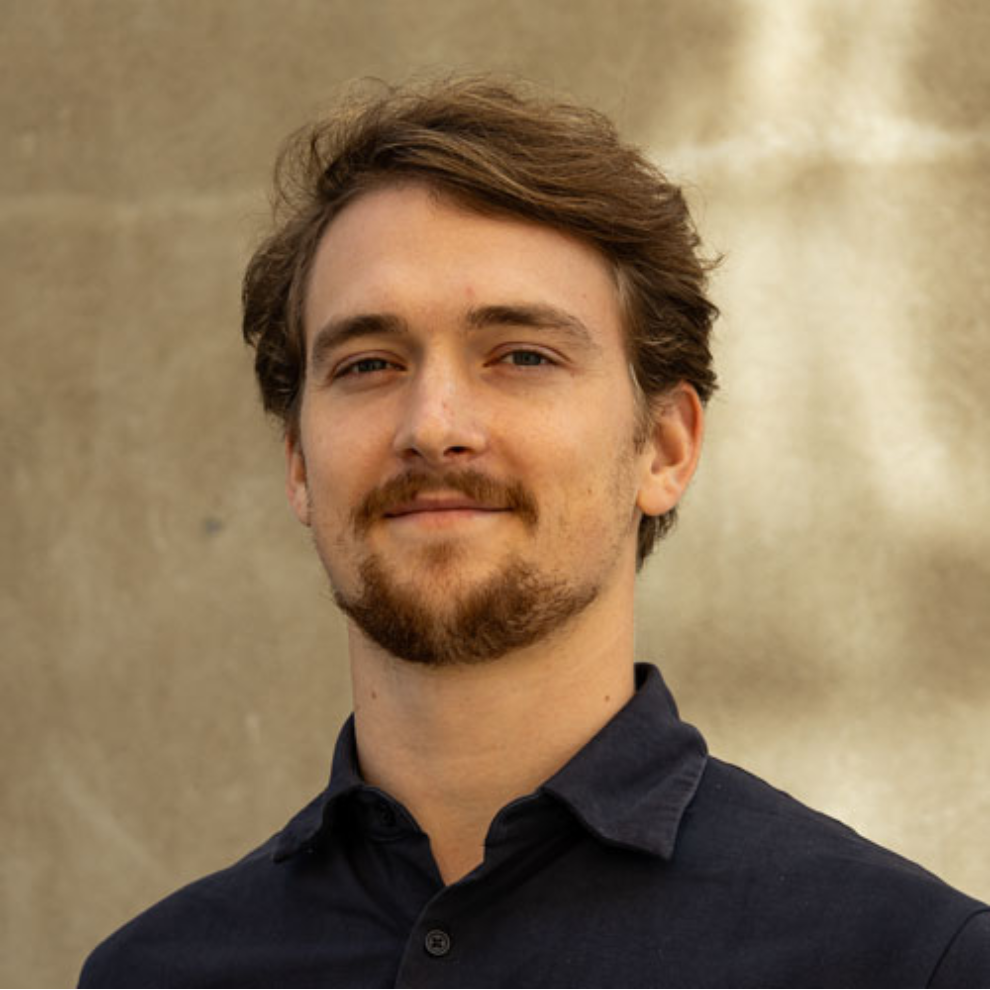
PhD Student
Works on continuous-variable quantum computation and tensor-network simulation methods.
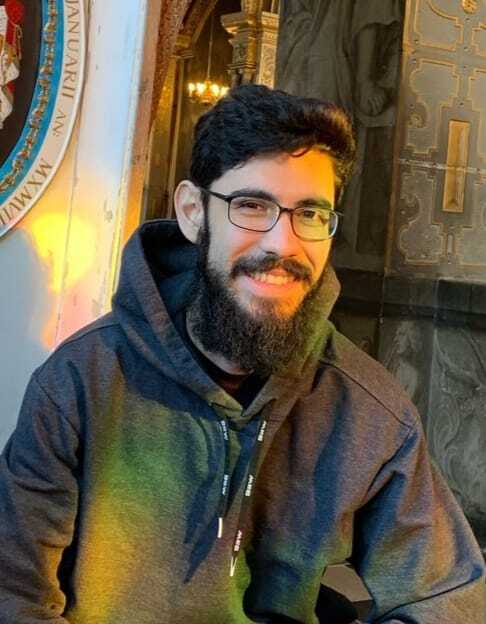
PhD Student
Focuses on quantum-inspired PDE solvers and high-dimensional numerical methods built from tensor decompositions.
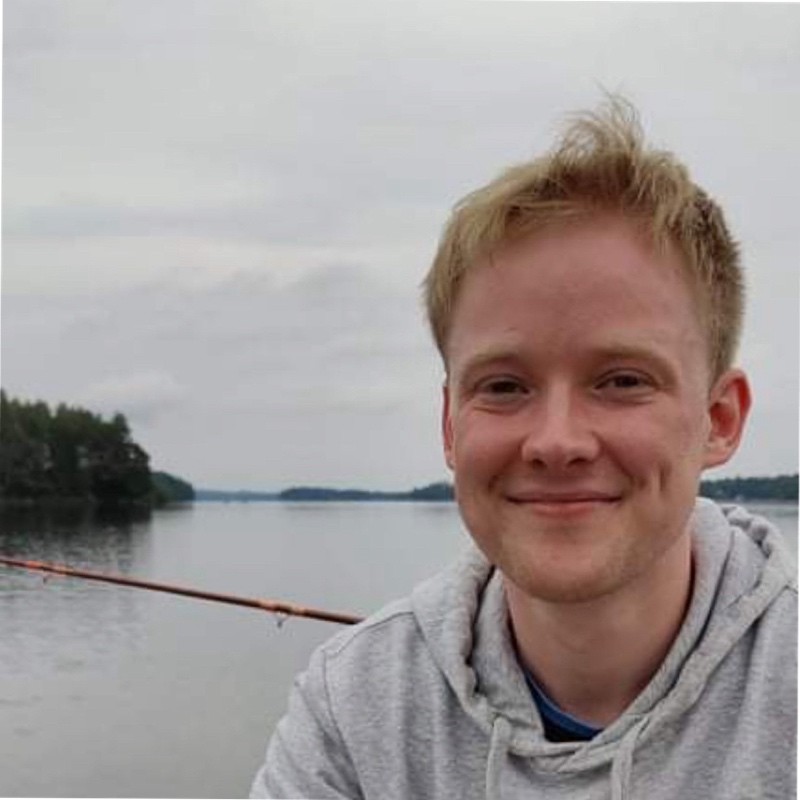
PhD Student
Develops tensor-network methods for computational physics and scientific machine learning.

PhD Student
Works on theoretical aspects of quantum computation and related algorithmic questions.
Publications
arXiv preprint, 2025.
TensorGRaD factorizes gradient tensors into complementary low-rank and sparse components, reducing optimizer-state memory by up to 75% while matching the accuracy of Adam, even on turbulent Navier-Stokes at Re = 10^5.
Quantum-inspired quantized tensor train methods for solving high-dimensional PDEs with logarithmic memory scaling and data-driven extensions.
A functional matrix product state framework for simulating non-Gaussian continuous-variable quantum circuits in real space.
Reformulates sampling problems as tensor-network variational tasks, enabling classical simulation of Gaussian Boson Sampling and related models.
NeurIPS 2024. Equal contribution with Mads Toftrup. Best Paper Award at WANT@ICML.
LoQT enables efficient quantized pre-training of LLMs with results close to full-rank non-quantized models, including a 13B model on a 24GB GPU without model parallelism, checkpointing, or offloading.
ICML 2024.
PuTT learns a coarse-to-fine tensor train representation of visual data for 2D and 3D fitting and novel view synthesis, even with noisy or incomplete data.
Presents an exactly detailed-balanced and efficiently implementable Lindbladian approach to quantum Gibbs sampling for noncommutative Hamiltonians.
Presentations
2025
Slides for the best paper presentation at the WANT@ICML workshop on LoQT and low-rank adapters for quantized pre-training.
2026
Research talk at the Pioneer Centre for AI covering Sebastian Loeschcke's work on machine learning, low-rank methods, and quantization.
2026
Presentation at the SAINTS Lab Workshop 2026 on TensorGRaD and memory-efficient training of neural operators using tensor gradient decomposition.
Repositories
Julia pacakage for numerical computations with quantics tensor trains
Alumni
Former Postdoc
Now at
Aarhus Energy A/S
Former Postdoc
Now at
NQCP Programme Manager
Contact
The group is interested in collaborations across theory, algorithms, and application domains. The Department of Computer Science is part of the Faculty of Science at the University of Copenhagen, and the group is based in the Machine Learning section. Students interested in joining or learning more about the group's work are encouraged to reach out to Michael, PhD students, or postdocs depending on their research interests.
Universitetsparken 1, 2100 København, Department of Computer Science, University of Copenhagen